EpiVax Supports Life-Saving Programs Through Partnerships with GAIA Vaccine Foundation and Clínica Esperanza/Hope Clinic
At EpiVax, we believe in the power of science to improve human health, but we also recognize that science alone cannot reach every community. That is why we are proud to support two incredible non-profit organizations: GAIA Vaccine Foundation and Clínica Esperanza/Hope Clinic. Through these partnerships, EpiVax helps amplify the impact of their programs, enabling vulnerable populations to access vaccines, preventive care, and health education.
GAIA Vaccine Foundation: Advancing Global Vaccine Access
Founded in 2005, GAIA Vaccine Foundation works to reduce infectious diseases in underserved communities and advance the development of vaccines that are globally accessible. GAIA’s work is grounded in four core pillars: education, prevention, access to care, and vaccination. Together, these pillars support integrated, community-based programs designed to address both immediate health needs and long-term public health outcomes.
GAIA VF’s programs span adolescent peer education, HIV and STI prevention, maternal and prenatal care, nutrition support, HPV vaccination, cervical cancer prevention, and medical staff training paired with community outreach. These efforts focus not only on delivering care, but also on building local capacity, reducing stigma, and strengthening trust between patients, providers, and public health systems.
In 2025, GAIA VF achieved remarkable outcomes across its clinical and community programs:
- Zero HIV transmission from mothers to children at their clinic
- 26,563 women received prenatal care through the MTCTP program
- 183 HIV-positive mothers delivered safely, ensuring HIV-free newborns
- 38,266 individuals received free HIV testing
- 41,076 meals were served to patients, families, and clinic staff
- 11,546 adolescents reached through teen peer education
- 11,075 cervical cancer screenings completed since 2022, with 186 women connected to free follow-up care
GAIA VF’s impact extends beyond direct service delivery through research that informs global vaccination strategies. Their 2025 study, Vaccine Confidence During Public Health Challenges and Prior to HPV Vaccine Introduction in Mali, examined vaccine confidence at a critical moment, just prior to the national introduction of the HPV vaccine and during ongoing disruptions caused by COVID-19 and political instability. Conducted between September 2021 and March 2022, the study surveyed 3,445 community members across 13 primary care clinics and paired community outreach with structured vaccine education. In parallel, 140 healthcare providers completed pre- and post-training surveys to assess changes in vaccine knowledge and confidence. Findings revealed a clear trust dynamic: community members placed greater trust in their primary care providers than in government sources for vaccine information, while providers relied heavily on government guidance. The study underscored the importance of equipping frontline healthcare workers with clear, consistent messaging and leveraging provider-led outreach to build public trust ahead of new vaccine introductions.
Looking ahead, GAIA VF aims to bring Lenacapavir to Mali, a twice-yearly treatment that acts similarly to a vaccine and can prevent adult-to-adult HIV transmission with 99.9% efficacy. This initiative reflects GAIA VF’s continued commitment to innovative, scalable solutions that can dramatically reduce disease burden in high-need settings.
EpiVax proudly supports GAIA Vaccine Foundation every year, helping sustain programs that save lives, strengthen health systems, and expand access to prevention and care for communities most affected by infectious disease.

Clínica Esperanza/Hope Clinic: Care for Our Community in Providence
Clínica Esperanza/Hope Clinic (CEHC) continues to be a lifeline for uninsured Rhode Islanders, delivering culturally attuned, linguistically appropriate medical care and preventive services to uninsured populations in Providence. Guided by its mission to reduce health disparities and strengthen community health self-efficacy, the clinic relies on its innovative Navegantes workforce. These multilingual community health workers trained as medical assistants, interpreters, and lifestyle educators. Over 250 Navegantes have completed a training program since 2016, helping patients navigate care, prevent emergencies, and access essential services with dignity and trust.
Demand for CEHC’s services continues to surge. In 2025, CEHC achieved:
- Over 1,100 new patients established care since January
- Over 900 emergency department preventable visits avoided
- Hypertension control in 74% of patients, diabetes A1C control in 63%, and 85% statin adherence in high-risk patients
- Vaccinations for over 520 community members across more than 30 outreach events
- Efficient, high-value care delivery, leveraging 3.7 times the value in donated resources per dollar spent
Their 2025 publication, Oportuna Vacuna: A Prospective Study of Vaccine Confidence and Vaccine Uptake in a Low-Income, Spanish-Speaking Rhode Island Population in the Post-Pandemic Era , evaluated a clinic-wide intervention that combined culturally and linguistically tailored education with operational changes to streamline vaccine delivery. The study found that overall vaccination rates increased more than 400% compared to the previous year, with particularly strong gains among first-time patients. Both patients and providers demonstrated improved vaccine knowledge and confidence, especially for COVID-19 and HPV vaccines, reinforcing the importance of trusted provider relationships in rebuilding vaccine confidence after the pandemic.
A second 2025 study, Continuity of Care and Lifestyle Intervention Programs for Spanish-Speaking Immigrants Without Health Insurance at a Free Clinic in Rhode Island, examined the impact of CEHC’s Bridging the [Health Equity] Gap program. Participants engaged in lifestyle education classes and regular provider visits over a multi-year period. The study showed significant and sustained improvements in metabolic biomarkers, including HbA1c and blood pressure, particularly among patients with diabetes or hypertension. Even during COVID-19 surges, when temporary setbacks were observed, overall trends demonstrated meaningful long-term health gains. The findings highlight the value of continuity-of-care models in supporting chronic disease management for uninsured immigrant populations.
Together, these studies demonstrate how CEHC integrates research, community engagement, and clinical care to deliver measurable improvements in health outcomes for vulnerable Rhode Island residents.
EpiVax was thrilled to continue supporting CEHC’s community programs in 2025, including the Thanksgiving Turkey Drive, which fed over 100 families, and the annual holiday gift distribution through our Vax Gives Back initiative.
Partnering to Strengthen Communities
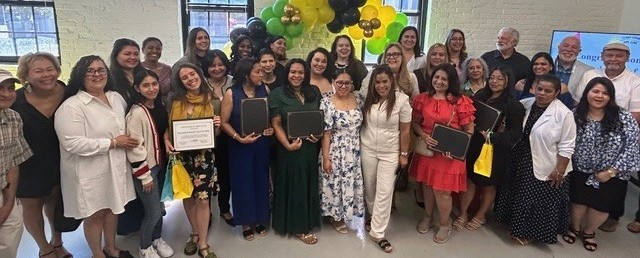
EpiVax is proud to stand alongside GAIA Vaccine Foundation and Clínica Esperanza/Hope Clinic. Through these partnerships, we help expand access to life-saving vaccines, preventive care, and health education—from our local Providence community to underserved populations across the world. By supporting these organizations, we contribute to measurable improvements in health, build stronger communities, and celebrate the achievements of teams dedicated to advancing health equity.
A Tradition of Giving Back
EpiVax holds a long-standing holiday tradition of giving back through a company-wide matching donations campaign. Each year, EpiVax matches donations made in support of organizations like GAIA Vaccine Foundation and Clínica Esperanza/Hope Clinic, or another nonprofit of your choosing, helping to extend the reach and impact of every contribution. This initiative reflects EpiVax’s ongoing commitment to strengthening communities, supporting health equity, and partnering with organizations that make a meaningful difference locally and globally.
Just fill out our short form to provide us the details we need to complete the match.